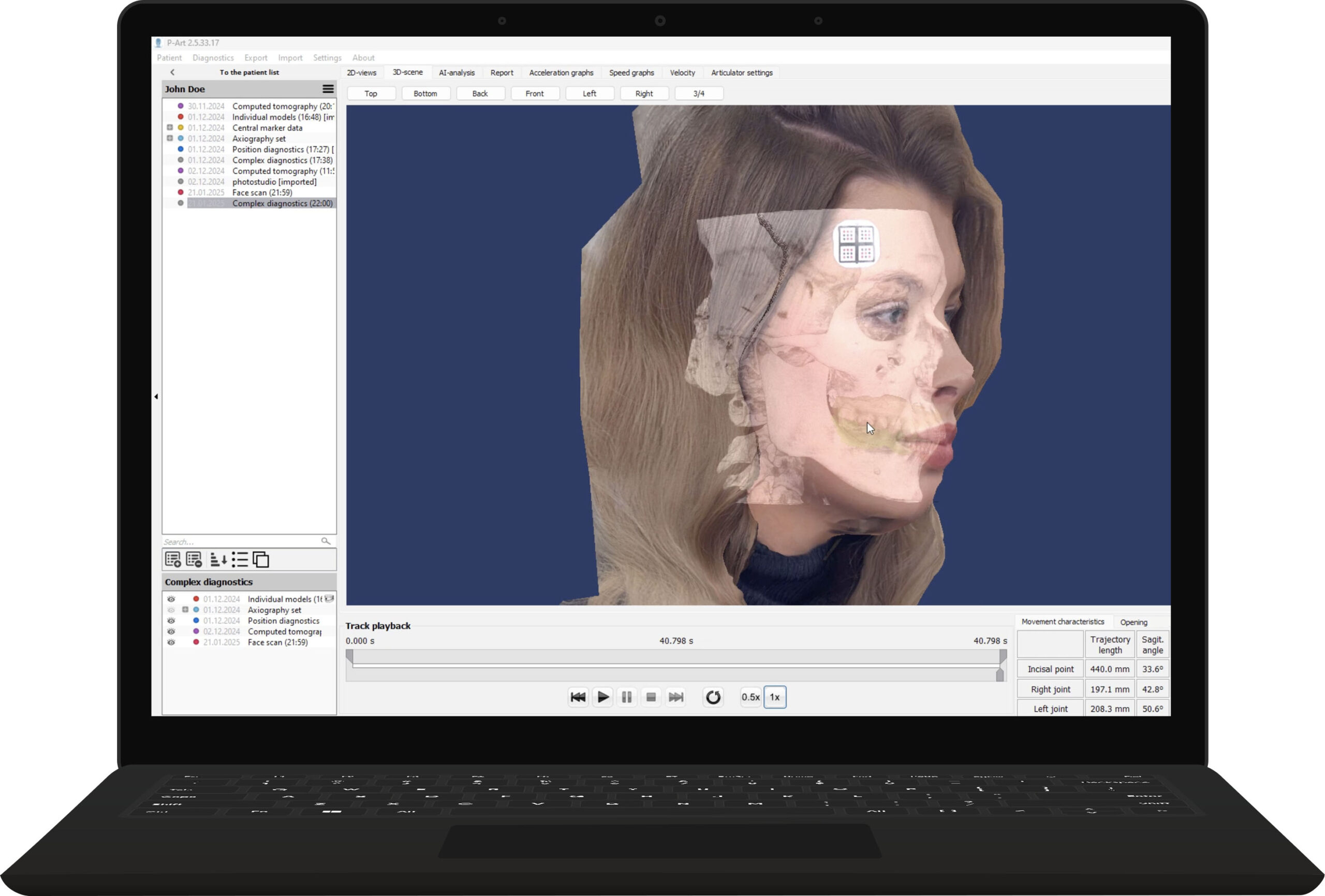
As of Tuesday, July 28, 2026, SDI Matrix is positioning itself less as a single device vendor and more as a connected functional-diagnostics platform for digitally driven dentistry. Across its official product pages, the company presents a workflow that combines jaw tracking, muscle analysis, facial data, CBCT integration and laboratory export into one planning chain.
What makes that notable is the way SDI Matrix frames the whole system. Instead of treating jaw-motion capture, software analysis and lab communication as separate steps, the company is building its message around continuity: capture dynamic data, analyze it in software, and pass the case forward into digital planning with as little information loss as possible.
What SDI Matrix is offering
On its official site, SDI Matrix currently presents three core layers of the ecosystem. The first is the SDI Jaw Tracker, a lightweight optical tracking system designed to record mandibular movement with markers attached to the upper and lower jaws and a head-mounted optical unit. The second is a wireless Myograph & TENS device intended for muscle activity analysis and transcutaneous electrical neurostimulation. The third is SDI Studio, the software layer that brings those records together with intraoral scans, facial scans and CBCT data.
According to the company’s SDI Studio page, the software is designed to visualize dynamic abnormalities, support bite-height assessment, merge multiple data types into one 3D project, and export planning information to Exocad. SDI Matrix also highlights AI-assisted functions such as jaw-motion recalculation, mandibular segmentation, joint-space color coding and model-to-CT alignment.
Why that matters
For clinicians and labs working on complex occlusal cases, full-mouth rehabilitation, splints, TMJ-related diagnostics or digital prosthetic planning, the pitch is easy to understand: static scans alone do not always explain how a patient functions. The more digital dentistry moves toward virtual-patient concepts, the more value there is in workflows that connect motion, anatomy and restorative design rather than leaving them in separate silos.
That is where SDI Matrix may attract attention. The company is not just promoting a recording device; it is promoting a diagnostic stack. If that stack proves practical in everyday use, it could appeal to practices and laboratories that want more than a digital impression and a lab prescription, especially when treatment planning depends on mandibular dynamics.
What clinicians should watch closely
The interesting question is not whether the concept sounds modern. It does. The more important question is how smoothly the workflow performs in real clinical hands: how repeatable the records are, how much chairside time the protocol adds, how steep the learning curve is, and how naturally the exported data fits into restorative and laboratory routines.
SDI Matrix clearly emphasizes support as part of the offer. Its official pages describe onboarding, remote assistance and even remote help with data interpretation. That is a meaningful detail, because advanced functional workflows often succeed or fail on training and implementation rather than on headline hardware alone.
The bigger picture
Digital dentistry has spent years improving how we capture teeth. The next competitive layer is improving how we capture function. SDI Matrix is betting that jaw tracking, muscle analysis and software-guided interpretation should sit closer to mainstream digital planning rather than remain niche add-ons.
That does not automatically make the platform a universal fit. But it does make SDI Matrix worth watching, particularly for dentists and technicians who believe the next phase of digital treatment planning will depend less on prettier scans and more on richer, patient-specific motion data.
Source note: This article is based on SDI Matrix’s official product pages for its digital ecosystem overview, SDI Jaw Tracker and SDI Studio, accessed on July 28, 2026.
About the author